Wednesday, May 12, 2021

Free Machine Learning you tube channel

 https://www.youtube.com/playlist?list=PL_iWQOsE6TfURIIhCrlt-wj9ByIVpbfGc

https://www.youtube.com/channel/UCVchfoB65aVtQiDITbGq2LQ

https://www.youtube.com/playlist?list=PL5-TkQAfAZFbzxjBHtzdVCWE0Zbhomg7r

https://www.youtube.com/playlist?list=PLoROMvodv4rMiGQp3WXShtMGgzqpfVfbU

https://www.youtube.com/playlist?list=PL2UML_KCiC0UlY7iCQDSiGDMovaupqc83

https://www.youtube.com/playlist?list=PLWnsVgP6CzadmQX6qevbar3_vDBioWHJL

https://www.youtube.com/playlist?list=PLLHTzKZzVU9e6xUfG10TkTWApKSZCzuBI

https://www.youtube.com/playlist?list=PL8PYTP1V4I8CHhppU6n1Q9-04m96D9gt5

https://www.youtube.com/playlist?list=PL05umP7R6ij1tHaOFY96m5uX3J21a6yNd

https://www.youtube.com/playlist?list=PLoROMvodv4rPLKxIpqhjhPgdQy7imNkDn


ML UI  incredible tools

https://www.h2o.ai/products/h2o-wave/

https://streamlit.io/

https://github.com/holoviz/panel

https://plotly.com/dash/

https://github.com/gradio-app/gradio

LIT: pair-code.github.io/lit More tools: github.com/Machine-Learni


Good GITHUB Sites


https://github.com/jwasham/coding-interview-university

https://github.com/lydiahallie/javascript-questions

https://github.com/EbookFoundation/free-programming-books

https://github.com/cloudcommunity/Free-Certifications

https://github.com/ossu/computer-science


MLOPS

https://mlops.githubapp.com/blog

https://mlops.community/

https://github.com/visenger/awesome-mlops

https://madewithml.com/

https://huyenchip.com/2020/12/30/mlops-v2.html

https://www.coursera.org/specializations/machine-learning-engineering-for-production-mlops

https://pages.dataiku.com/oreilly-introducing-mlops


Good site for web developer

https://ohshitgit.com/

https://sitechecker.pro/

https://caniuse.com/

https://www.toptal.com/developers/gitignore

https://keyframes.app/


CSS help:

1. Color Hunt colorhunt.co 2. Coolors coolors.co 3. HTML color codes htmlcolorcodes.com 4. UI Gradients uigradients.com 5. Gradient generator

https://cssgradient.io/


https://markodenic.com/css-tips/


Graduation cap Reproducible Deep Learning - sscardapane.it/teaching/repro Graduation cap MLOps - madewithml.com Graduation cap Full Stack Deep Learning - fullstackdeeplearning.com Graduation cap Machine Learning Engineering for Production - deeplearning.ai/program/machin

Some pretty amazing slides and notes for this Data Structures course. cs.umd.edu/class/spring20

200+ free video lectures on all sorts of topics related to deep learning. From Graph Attention Networks to RL algorithms. repo: github.com/maziarraissi/A playlist: youtube.com/playlist?list=


https://ocw.mit.edu/courses/mathematics/18-650-statistics-for-applications-fall-2016/lecture-videos/


https://collegecompendium.goldin.io/

Tuesday, May 11, 2021

Mathematics for Data Science


https://computationalthinking.mit.edu/Spring21/


Overwhelmed by looking for resources to understand the math behind data science and machine learning? We got you covered.


Motivation

Learning the theoretical background for data science or machine learning can be a daunting experience, as it involves multiple fields of mathematics and a long list of online resources.

In this piece, my goal is to suggest resources to build the mathematical background necessary to get up and running in data science practical/research work. These suggestions are derived from my own experience in the data science field, and following up with the latest resources suggested by the community.

However, suppose you are a beginner in machine learning and looking to get a job in the industry. In that case, I don’t recommend studying all the math before starting to do actual practical work, this bottom-up approach is counter-productive, and you’ll get discouraged, as you started with the theory (dull?) before the practice (fun!).

My advice is to do it the other way around (top-down approach), learn how to code, learn how to use the PyData stack (Pandas, sklearn, Keras, etc.), get your hands dirty building real-world projects, use libraries documentation and YouTube/Medium tutorials. THEN, you’ll start to see the bigger picture, noticing your lack of theoretical background, to understand how those algorithms work, at that moment, studying math will make much more sense to you!

Here’s an article by the fantastic fast.ai team, supporting the top-down learning approach

And another one by Jason Brownlee in his gold mine “Machine Learning Mastery” blog

Resources

I will divide the resources to 3 sections (Linear Algebra, Calculus, Statistics and probability), the list of resources will be in no particular order, resources are diversified between video tutorials, books, blogs, and online courses.

Linear Algebra

Used in machine learning (& deep learning) to understand how algorithms work under the hood. It’s all about vector/matrix/tensor operations; no black magic is involved!

  1. Khan Academy Linear Algebra series (beginner-friendly).
  2. Coding the Matrix course (and book).
  3. 3Blue1Brown Linear Algebra series.
  4. fast.ai Linear Algebra for coders course, highly related to modern ML workflow.
  5. The first course in Coursera Mathematics for Machine Learning specialization.
  6. “Introduction to Applied Linear Algebra — Vectors, Matrices, and Least Squares” book.
  7. MIT Linear Algebra course, highly comprehensive.
  8. Stanford CS229 Linear Algebra review.

Calculus

Used in machine learning (&deep learning) to formulate the functions used to train algorithms to reach their objective, known by loss/cost/objective functions.

  1. Khan Academy Calculus series (beginner-friendly).
  2. 3Blue1Brown Calculus series.
  3. The second course in Coursera Mathematics for Machine Learning specialization.
  4. The Matrix Calculus You Need For Deep Learning paper.
  5. MIT Single Variable Calculus.
  6. MIT Multivariable Calculus.
  7. Stanford CS224n Differential Calculus review.

Statistics and Probability

Used in data science to analyze and visualize data, to discover (infer) helpful insights.

https://www.khanacademy.org/math/statistics-probability

  1. Khan Academy Statistics and probability series (beginner-friendly).
  2. A visual introduction to probability and statistics, Seeing Theory.
  3. Intro to Descriptive Statistics from Udacity.
  4. Intro to Inferential Statistics from Udacity.
  5. Statistics with R Specialization from Coursera.
  6. Stanford CS229 Probability Theory review.

Bonus materials

  1. Part one of Deep Learning book.
  2. CMU Math Background for ML course.
  3. The Math of Intelligence playlist by Siraj Raval.

So, that was me giving away my carefully curated Math bookmarks folder for the common good! Hope that helps you expand your machine learning knowledge, and fight your fear of discovering what’s happening behind the scenes of your sklearn/Keras/pandas import statements.

Your contributions are very welcomed, through reviewing one of the listed resources or adding new awesome ones.

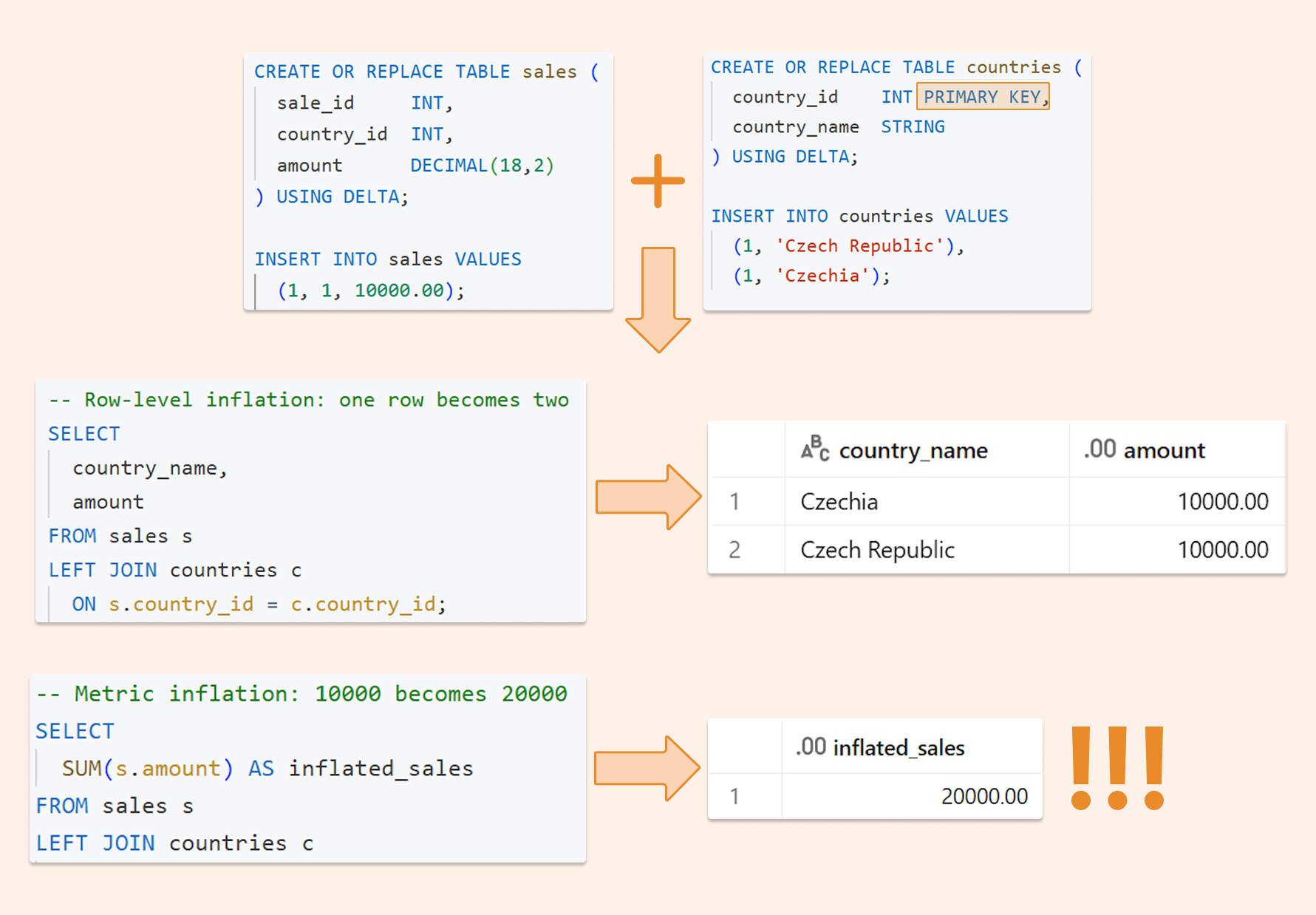
Deduplicating Data on the Databricks Lakehouse: Making joins, BI, and AI queries “safe by default.”

  Imagine this: your manager asks the AI analytics tool: "What were our top-selling products last quarter?" The AI generates perfe...