Sunday, September 6, 2020

10 Cool Python Project Ideas for Python Developers

 The joy of coding Python should be in seeing short, concise, readable classes that express a lot of action in a small amount of clear code — not in reams of trivial code that bores the reader to death.

- Guido van Rossum

is one of the most used in the world, and that can be contributed to its general-purpose nature, which makes it a suitable candidate for various domains in the industry. With Python, you can develop programs not just for the web, but also for desktop and command-line. Python can be suitable for programmers of varying skill levels, right from the students to intermediate developers, to experts and professionals. But every programming language requires constant learning, and its the same case with Python.

If you truly want to get in-depth practical knowledge, there is no better way to get your hands dirty with Python than to undertake some cool projects that will not only keep you occupied in your free time but will also teach you how to get more out of Python.

Did You Know?

According to Stackoverflow, Python is the most preferred language which means that the majority of developers use python.


Choosing a Project Platform

Python can be a very versatile programming language in the right hands, and you can build many nifty programs with it to strengthen your command over the language. It is of utmost importance to have more exposure to practical knowledge than theoretical, especially when it comes to learning programming languages, such as Python.

But before we dive into the fun projects we have store for you, you must decide which platform you’re going to be working on. The platforms for the projects mentioned in this article can be categorized into three categories listed below:

● Web

Building a web application allows you and everyone else to access it from anywhere via the internet. For that, you would need to work on the front-end, the visual part, and the back-end of the application, where the business logic is implemented. Tools & Frameworks such as , , and are some of the many options you can use for this.

● Desktop GUI

Desktop applications are also very commonly used and cater to a sizable chunk of users. When it comes to building desktop applications, Python makes it very easy for you to develop one using its package, which allows you to build all the necessary elements using Python. The framework also offers advanced GUI building elements but has a steeper learning curve.

● Command-Line

Command-line programs work only in console windows and have no GUI at all. The user interaction takes place via commands and it is the oldest method of interacting with programs but don’t mistake its lack of GUI for its lack of usefulness. Hundreds of top enterprises depend on command-line programs to perform their daily business activities. To build command-line programs, you can use tools such as , , , and .

“Python has been an important part of Google since the beginning, and remains so as the system grows and evolves. Today dozens of Google engineers use Python, and we’re looking for more people with skills in this language.”

- Peter Norvig, director of search quality at


Python Project Ideas for Python Developers

If you have made up your mind about the platform you’re going to use, let’s jump straight into the projects. Mentioned below are some fun projects addressed towards developers of all skill levels that will play a crucial role in taking their skills and confidence with Python to the next level.

1. Content Aggregator

content aggregator tool
Photo by on

The internet is a prime source of information for millions of people who are always looking for something online. For those looking for bulk information about a specific topic can save time using a content aggregator.

A content aggregator is a tool that gathers and provides information about a topic from a bulk of websites in one place. To make one, you can take the help of the requests library for handling the HTTP requests and for parsing and scraping the required information, along with a database to save the collected information.

Examples of Content Aggregators:

2. URL Shortener

URLs are the primary source of navigation to any resource on the internet, be it a webpage or a file, and, sometimes, some of these URLs can be quite large with weird characters. URL shorteners play an important role in reducing the characters in these URLs and making them easier to remember and work with.

The idea behind making a URL shortener is to use the random and string modules for generating a new short URL from the entered long URL. Once you’ve done that, you would need to map the long URLs and short URLs and store them in a database to allow users to use them in the future.

Examples of Content Aggregators —

Here is the link to join the course for FREE: —

3. File Renaming Tool

File Renaming tool created with Python
Photo by from

If your job requires you to manage a large number of files frequently, then using a file renaming tool can save you a major chunk of your time. What it essentially does is that it renames hundreds of files using a defined initial identifier, which could be defined in the code or asked from the user.

To make this happen, you could use the libraries such as , , and in Python to rename the files instantaneously. To implement the option to add a custom initial identifier to the files, you can use the to match the naming patterns of the files.

Examples of Bulk File Rename Tools —

4. Directory Tree Generator

A directory tree generator is a tool that you would use in conditions where you’d like to visualize all the directories in your system and identify the relationship between them. What a directory tree essentially indicates is which directory is the parent directory and which ones are its sub-directories. A tool like this would be helpful if you work with a lot of directories, and you want to analyze their positioning. To build this, you can use the to list the files and directories along with the

Examples of Directory Tree Generators —

5. MP3 Player

mp3 player built by Python
Photo by on

If you love listening to music, you’d be surprised to know that you can build a music player with Python. You can build an mp3 player with the graphical interface with a basic set of controls for playback, and even display the integrated media information such as artist, media length, album name, and more.

You can also have the option to navigate to folders and search for mp3 files for your music player. To make working with media files in Python easier, you can use the , , and libraries.

Examples of Content Aggregators —

6. Tic Tac Toe

Tic Tac Toe is a classic game we’re sure each of you is familiar with. It’s a simple and fun game and requires only two players. The goal is to create an uninterrupted horizontal, vertical, or diagonal line of either three Xs or Os on a 3x3 grid, and whoever does it first is the winner of the game. A project like this can use Python’s , which comes with all the required graphics and the audio to get you started with building something like this.

Tic tac toe
Tic tac toe
Image by from

Here are a few tutorials you can try:

More Fun Python projects for game dev:

7. Quiz Application

Another popular and fun project you can build using Python is a quiz application. A popular example of this is which is famous for making learning a fun activity among the students. The application presents a series of questions with multiple options and asks the user to select an option and later on, the application reveals the correct options.

As the developer, you can also create the functionality to add any desired question with the answers to be used in the quiz. To make a quiz application, you would need to use a database to store all the questions, options, the correct answers, and the user scores.

Examples of Content Aggregators —

Read about the Best Python IDEs and Code Editors —

8. Calculator

Developing a calculator with Python
Photo by from

Of course, no one should miss the age-old idea of developing a calculator while learning a new programming language, even if it is just for fun. We’re sure all of you know what a calculator is, and if you have already given it a shot, you can try to enhance it with a better GUI that brings it closer to the modern versions that come with operating systems today. To make that happen, you can use the package to add GUI elements to your project.

9. Build a Virtual Assistant

Build a virtual assistant with Python
Photo by on

Almost every smartphone nowadays comes with its own variant of a smart assistant that takes commands from you either via voice or by text and manages your calls, notes, books a cab, and much more. Some examples of this are Google Assistant, Alexa, Cortana, and Siri. If you’re wondering what goes into making something like this, you can use packages such as , , and Wikipedia. The goal here is to record the audio, convert the audio to text, process the command, and make the program act according to the command.

Here is the link to join the course for FREE —

10. Currency Converter

As the name suggests, this project includes building a currency converter that allows you to input the desired value in the base currency and returns the converted value in the target currency. A good practice is to code the ability to get updated conversion rates from the internet for more accurate conversions. For this too, you can use the package to build the GUI.


More Python Project Ideas to Build—


Conclusion

Concluding our list of a handful of interesting ideas and projects you can build using Python, we can say that Python can be a very useful programming language to develop applications of all sorts and scales. Furthermore, the packages provided by Python offer immense value to the developers in simplifying the development process to a great extent. To wrap things up, we would like to say that the potential with Python is limitless, and the only thing that you might be missing could be the right idea.

If you have more suggestions or ideas, we’d love to hear about them.


About Author

Claire D. is a Content Crafter and Marketer at Digitalogy — a tech sourcing and custom matchmaking marketplace that connects people with pre-screened & top-notch developers and designers based on their specific needs across the globe. Connect with Digitalogy on Linkedin, Twitter, Instagram.

Tuesday, September 1, 2020

What Is Python & Django and Why Are They Considered a Top Choice for Web Development?”

 Choosing a programming language for your product is a major challenge. It’s a big decision. There are plenty of programming languages, but usually a couple lend themselves to your particular goals.

Here at SteelKiwi, Python and the Django web framework are our primary tools for backend web development. As one of the leading Python and Django development companies, we have a number of reasons for developing web projects using these technologies. In this article, we’ll tell you what Python and Django are, why they’re so popular, who uses them, and why you should consider Python web development with Django.

The what, who, and why of Python web development

To find out whether Python is the best web development option for your software, you should examine Python in detail. And the first thing to consider is what Python is.

What is Python?

While writing an email application in C around 1990, Guido van Rossum encountered some difficulties crafting a login program since there weren’t existing systems for managing logins and passwords yet. Feeling that this login program would have involved writing too much in C, van Rossum came up with the idea of Python. First introduced to the public in 1991, Python was the most loved language in 2018 according to the annual Stack Overflow survey. What’s so special about Python? And why is it so popular? Let’s first answer the question of what Python is.

According to the Python Software Foundation, “Python is an interpreted, object-oriented, high-level programming language with dynamic semantics.” Let’s break this down.

  • Python is a high-level programming language, meaning it contains words and phrases comprehensible to humans. To translate this high-level language into machine code, Python uses an interpreter. An interpreter converts source code into code understood by computers. As an interpreted language, Python uses memory efficiently, is easy to debug, and allows developers to perform complex tasks in a couple of steps and edit code quickly.
  • Most modern programming languages, including Python, are considered object-oriented. The idea behind object-oriented languages is that the program is split into independent objects that communicate between themselves. This pretty much looks like a collection of mini-programs. Objects help developers write better structured code, resulting in software that’s easier and faster to build, maintain, and debug.
  • Python is a dynamic language. This means that developers don’t have to declare variable types. Python verifies types and errors at runtime (when the program is launched), but not during compilation (when source code is converted to machine code). This results in less code, faster development, and greater flexibility and resilience.

Why is Python good for web development?

Python continues to be one of the most popular languages. According to TIOBE, Python is ranked among the top programming languages. BuiltWith states that there are almost a million websites that use Python.

The TIOBE Programming Community index that indicates top popular languages of March 2019
SOURCE: TIOBE.COM

Python is valued equally among startups such as Finance Strategists, mid-size companies such as EP Wealth, blue chip companies like Google, Quora, Netflix, and Spotify, and government organizations like NASA. Yet few people know why Python is one of the top programming languages for website development. So why has it gained great popularity and interest among startup founders?
Here’s what the Python Software Foundation says:


Python is powerful… and fast; plays well with others; runs everywhere; is friendly & easy to learn; is Open.

Powerful and fast

Python is powerful, and it can be used for literally anything. First and foremost, it can be used for anything because it offers many features by default, with standard libraries that cover almost any programming task. Whether you’re running scientific calculations, processing images, or developing operating system interfaces or protocols, Python saves time and effort by presenting ready-made solutions.

Additionally, Python serves well for products that you want to get to market as soon as possible. For both startups and established businesses, this means faster return on investment (ROI) and a chance to tailor the product based on reviews and feedback from real users.

Plays well with others

Python is functional enough to interface with code written in other programming languages. You can embed your Python project into frameworks of different languages, and vice versa. This means that you can create projects that mix Python with other programming languages (for example, C++) and get the best of two worlds.

Runs everywhere

Python is available for almost any operating system, including UNIX-based operating systems, Windows, macOS, iOS, and Android. It also runs on various platforms, including IBM, AIX, Solaris, and VMS.

Friendly and easy to learn

Python is considered a highly effective way of coding because of its simple syntax and readability. Python is an easy-to-learn language, and thus there’s a large enough talent pool.

Because Python uses spacing instead of braces and other special characters to indicate the beginning and end of programming constructs, readability is a built-in feature. Whenever you need to update a project in Python, it’s relatively easy to find someone who can look at its code and make the necessary changes even if they’ve never seen it before. Developers don’t have to spend a great deal of time thinking about complexities in the language or deciphering someone else’s code.

Open

Python is an open-source language administered and supported by an independent nonprofit foundation: the Python Software Foundation. One of the major advantages of open-source software is that it’s free to use, modify, and distribute. Since the Python community is open to everyone and encourages diversity, millions of experienced developers around the world contribute to it and add to the growing Python open-source database. There are plenty of conferences and meetups, and there’s lots of code collaboration. This means that Python is less inclined to bugs and more secure than some other popular languages. Additionally, it helps you minimize development expenses.

Who uses Python?

Python is a multi-purpose language and can be used to build practically anything. Companies around the world use Python for artificial intelligence and machine learning, website development, scientific and numerical computing, gaming, and many other uses.

As for artificial intelligence, Python stands above other programming languages and is considered the best programming language for AI-powered applications. In fact, Python addresses any AI task: machine learning, data analysis and visualization, natural language processing, and computer vision.

There are dozens of companies that use Python in one form or another for its flexibility, scalability, performance, and rapid development. Below are examples of businesses that use Python extensively.

Google

Python has been an important part of Google since the beginning, and remains so as the system grows and evolves. Today dozens of Google engineers use Python, and we’re looking for more people with skills in this language.

— Peter Norvig, Google’s Research Director

One of the largest companies that relies on Python is Google. The first version of the Google search engine and the entire technology stack were actually written in Python. Today, Python is one of the three main programming languages used by Google, together with Java and C++.

Google has a finger in every pie: search, email, music and video streaming, hardware, driverless cars, and advertising. In fact, YouTube’s entire technology stack is written in Python. Originally, YouTube was actually written in PHP. However, because of fast user growth and the need to quickly develop and implement new features, YouTube soon migrated to Python. Cuong Do ã…¡ a software architect at YouTube ã…¡ says that “Python is fast enough for our site and allows us to produce maintainable features in record times, with a minimum of developers.”

Google’s welcome screen ― one of the companies that use Python
 
SOURCE: DRIBBLE.COM BY REMINGTON MCELHANEY


Facebook

Another big player that uses Python is Facebook. Alongside PHP and C++, Python helps Facebook maintain, manage, and scale their infrastructure efficiently and reliably.

Facebook also uses Python for machine learning. On Facebook, machine learning algorithms are used to curate content in the News Feed and to detect objects in photos. Facebook users are recognized in pictures even when they aren’t tagged. And for people with vision impairments, Facebook describes photos with words.

Different screens of Facebook ― an app that leverages Python
SOURCE: PLAY.GOOGLE.COM

Dropbox

Dropbox is a cloud storage platform for documents, music, images, video, and more. The Dropbox application is available on most devices and offers users anywhere, anytime access. Dropbox has been using Python for the entire technology stack right from the start. First, it was Python code using PyWin32: one of the Python libraries for Windows-specific functionality. Later on, they moved to Python 2, and then to Python 3. At present, the Dropbox application uses a customized version of Python 3.5. They also use the Django framework, which powers file storage functionality, account synchronization, and file sharing.

The welcome screen of Dropbox ― the app that uses Python for the entire technology stack
SOURCE: DRIBBLE.COM BY BRANDON LAND

Alternatives to Python

Python is often compared to other programming languages. Below, we briefly compare the most common alternatives to Python: Java, PHP, and Ruby.

Alternatives to Python programming languages.
SOURCE: STEELKIWI.COM

The what, who, and why of Django web development

If you’ve decided to make website in Python, it’s time to think about picking a framework. Since we’re a Python software development company with a focus on Django, we’re going to cover every important aspect concerning Python web development with Django to find out whether it’s what you need for your startup.

What is Django?

Django is a free, open-source, full-stack web application framework written in Python. In simple words, Django is a set of ready-made components that help you rapidly build websites with pragmatic and clean architectures. When crafting websites, developers frequently need the same components for tasks like authenticating users, uploading files, and implementing CMS systems. So as not to reinvent the wheel each time you make a new site, Django provides ready-made solutions.

What’s the difference between core Python and Django?

Python and Django are intertwined but not the same. Python is a programming language that’s used for many different applications: artificial intelligence, machine learning, desktop apps, etc. On the other hand, Django is a Python framework for full-stack web application development and server development.

You can build a website either from scratch in core Python, arriving at the solution yourself, or you can craft your app with Django using prewritten bits of code.

Why is Django good for web development?

Among Python frameworks, Django is often regarded as the best framework for web application development. It was even included in the list of most loved frameworks in the 2018 Stack Overflow Developer Survey.

According to the Django Software Foundation, Django was “invented to meet fast-moving newsroom deadlines, while satisfying the tough requirements of experienced web developers.” The framework was invented by Adrian Holovaty and Simon Willison, developers who worked at the news website World Online. At the time, Adrian and Simon were writing in PHP. But since the World Online website required quick updating, it became hard to meet deadlines. Adrian and Simon needed something they could build the website with quickly. That was when they decided to move to Python. Later on, they started working on Django to make coding even simpler and more effective. In 2005, Django was already publicly released as an open-source project. Today, Django is known as

The web framework for perfectionists with deadlines.

For perfectionists

Thanks to simple syntax and readable code, programs written in Django are clean and well-structured. This help developers make their ideas a reality and meet requirements faster.

With deadlines

Django was crafted to help build software as quickly as possible. The Don’t Repeat Yourself (DRY) philosophy on which Django is built motivates developers to reuse code they’ve written for other projects, further reducing the time needed to develop your product. So if you’re short on time and have a limited budget or if you often work tight deadlines and place a high premium on innovation, then Django is a perfect solution.

These aren’t the only things that make Django your top choice for web development. There are even more great features that the Django web framework provides.

Batteries included

Django’s batteries included approach means that the framework has everything necessary to develop a full-fledged application. Django offers built-in HTML templating, URL routing, object-relational mapping, and session management, helping developers avoid the vexing search for third-party tools. Hundreds of Django packages help you quickly create anything from chatbots to complex GPS-enabled solutions.

Extends and scales with ease

Django components are decoupled, meaning they can be added or removed as necessary just like Lego pieces. Depending on your specific product requirements, development can be scaled up or down, altering the number and complexity of Django components as necessary.

Read more: Best practices for working with Django models in Python

Offers robust security

By default, Django protects applications. It mitigates some of the more common security mistakes related to Python while also protecting apps from cross-site scripting, request forgery, and SQL injection.

Works with most major databases

Django’s object-relational mapping (ORM) is compatible with a number of popular databases, but its key feature is that it allows developers to work with several databases at once. Moreover, Django makes it possible to migrate from one database to another and perform common operations without having to write much additional code.

Helps with search engine optimization

Among other things, Django offers a number of useful search engine optimization (SEO) tools. With the Django SEO framework, developers can reduce page loading time by using cached templates and compressing CSS and JavaScript. There’s even a tool to manage robots.txt. All in all, the capabilities of the Django content management system exceed the expectations of many SEO specialists, proving that Django is one of the best frameworks for search engine optimization.

Constantly evolves thanks to its community

There’s a large community around Django, with more enthusiasts joining every day. They constantly update and improve components of the framework while also developing new libraries to solve issues that professionals often face when developing web applications.

Who uses Django?

Below, we’ve listed some of the major companies that benefit from this technology. Let’s have a look at how Django has helped these companies grow and develop.

Disqus

Disqus is a third-party comment application for blogs and online communities. It helps with user retention and audience analytics, provides advertising opportunities, and offers tools for user engagement. When starting off, Disqus considered various architectures but opted for Python, Django, Thoonk, and Nginx Push Stream Module. On Disqus, Django enables custom analytics, social media integration, and online presence management.

Disqus used the Django framework not only for development and scaling but also to create Sentry ― a side project initially for internal use. Later, Sentry became an open-source application that helps businesses track and debug errors and fix crashes in their systems. Today, more than 30,000 companies including Doordash, Instagram, Reddit, Prezi, and Datadog use Sentry.

Disqus’ home feed ― an app that uses the Django framework for development
SOURCE: DRIBBBLE.COM BY ALEC SCHMIDT


Instagram

The Django web framework is popular among social networking platforms, since it can handle large volumes of data and manage a significant number of user interactions per minute.

With more than one billion active monthly users, over 500 million stories posted every day, and 100+ million photos uploaded daily, Instagram needs to ensure maximum efficiency so the platform can keep on scaling smoothly without sacrificing quality. Django is what helps them handle this. In fact, Instagram has the biggest deployment of Django in the world.

As Instagram grew, they started considering a new technology stack. Yet after carefully weighing the pros and cons, they decided to stick to Python and Django. In an interview, Hui Ding, the former head of the Instagram engineering team, says that “we had been able to get to a few hundred million users with our Python/Django stack, so we decided we would continue. Also significant in the decision was that our engineers really love Python. It’s actually a reason people want to come work for us.”

Instagram app screens ― a company that uses Django
SOURCE: DRIBBBLE.COM BY JOY-VINCENT NIEMANTSVERDRIET

Alternatives to Django

Pyramid, Laravel, Symfony, and Ruby on Rails are frameworks that are often considered alternatives to Django.

Alternatives to Django frameworks
SOURCE: STEELKIWI.COM

If you’d like to stay updated on our new case studies and see more projects we’ve developed using Python and Django, visit the SteelKiwi projects page or follow us on social media. To outsource Python development to us, contact one of our sales representatives. You may also find Python programmer jobs with Jooble.

Useful links

  1. Singleton Design Pattern Example: Singleton Models in Django
  2. First-Hand Experience: Django Project Template by SteelKiwi
  3. Integrate a WebSocket Server Written in aiohttp into an Existing Django Project

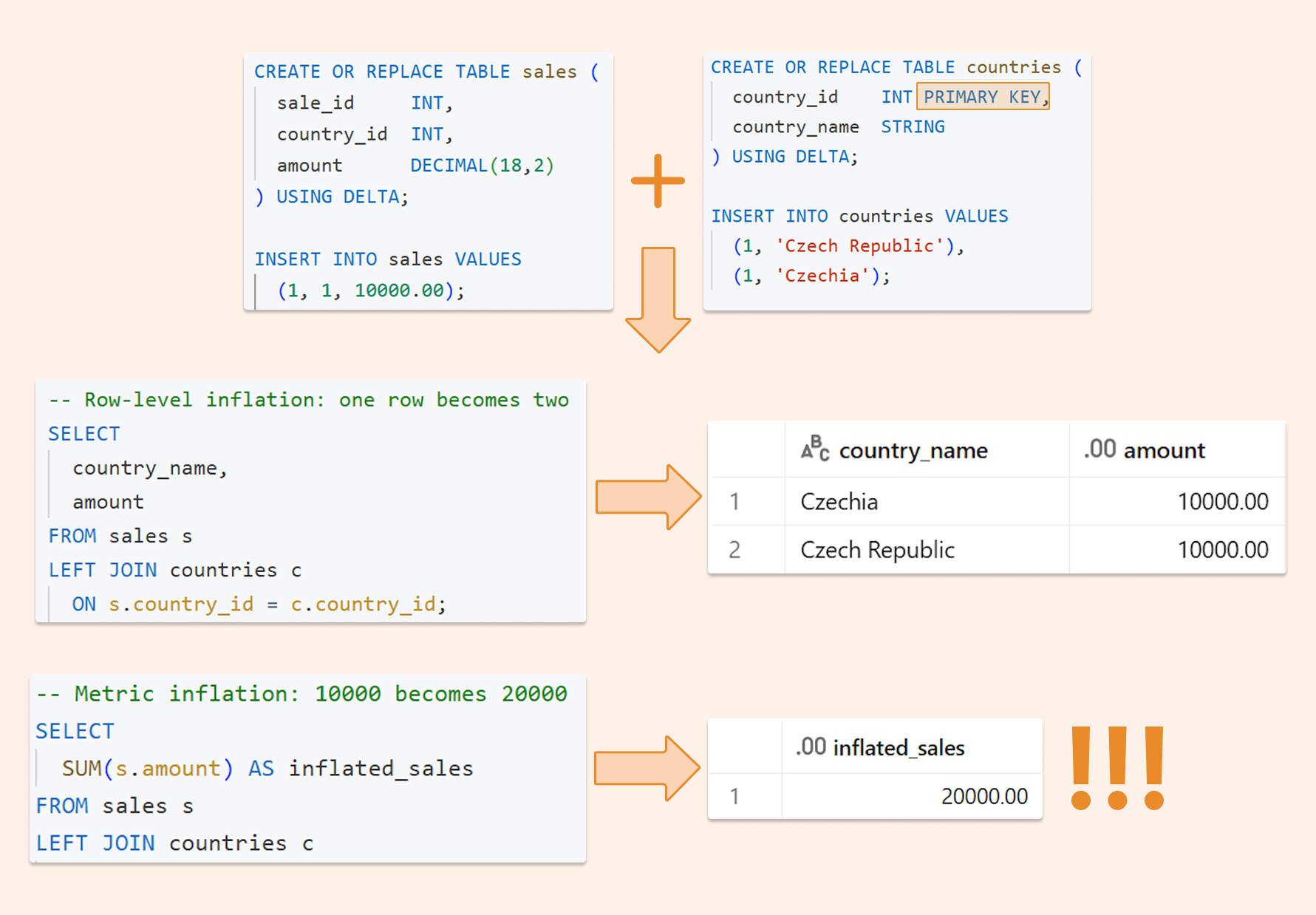
Deduplicating Data on the Databricks Lakehouse: Making joins, BI, and AI queries “safe by default.”

  Imagine this: your manager asks the AI analytics tool: "What were our top-selling products last quarter?" The AI generates perfe...